Live · Qatar Now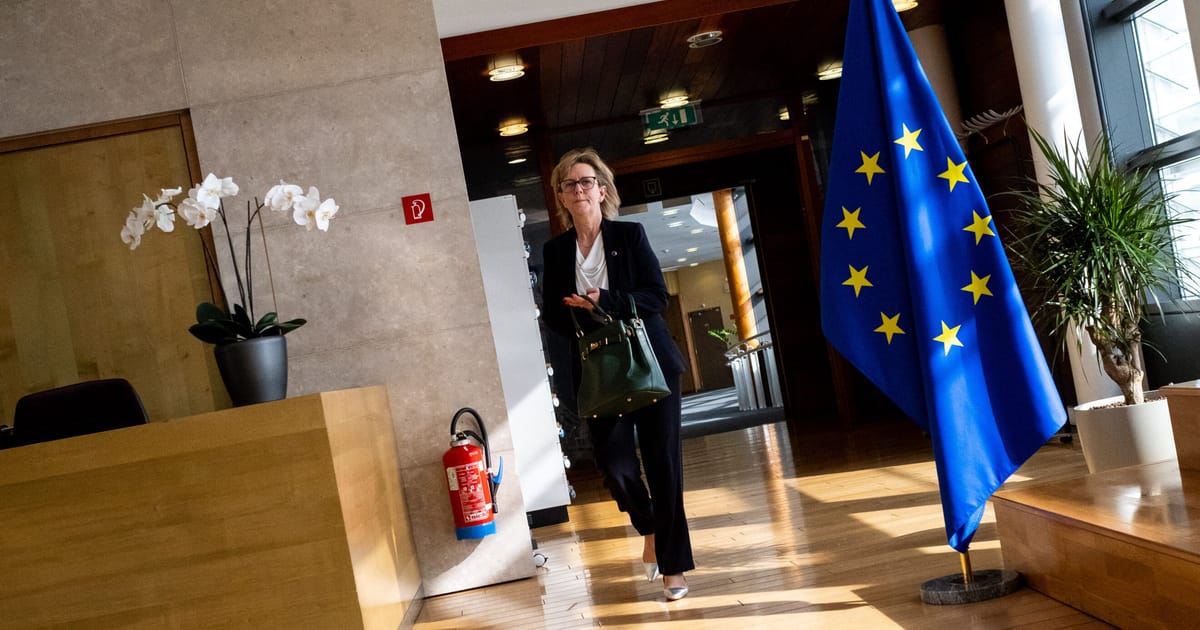
News Financial Services The European Commission “deeply regrets” the deal, which would give national regulators powerful checks on the watchdog’s work. Copy Link Copied Share via email Share on X Share on WhatsApp Share on LinkedIn European Commissioner for Financial Services and the Savings and Investments Union Maria Luis Albuquerque during the meeting of the College of the European Commissioners in Brussels, Belgium on May 21, 2025. October 9, 2026 1:27 pm CET LUXEMBOURG — EU finance ministers struck a compromise to beef up the bloc’s markets watchdog Friday, but the deal exposed divisions over national control and exemptions that critics say favor the biggest member countries.
Most finance ministers backed the Council’s position on MISP, a package of bills to integrate and police financial markets. At its heart is a plan to give the EU’s securities regulator powers to oversee major financial players — a flagship bid to make Europe a stronger investment hub, where European companies can seek investors without traveling to Wall Street. But capitals stopped short of handing the future watchdog too much autonomy, triggering a hard rebuke from the European Commission.
“We deeply regret that the compromise now on the table falls significantly short of the level of ambition needed,” Finance Commissioner Maria Luís Albuquerque told ministers during Friday’s public Ecofin debate in Luxembourg. “We need [the European Securities and Markets Authority] to become an effective supervisor. The current compromise text would not allow for that.” France spearheaded a last-minute push over dinner Thursday to strengthen the watchdog’s executive powers.
Paris took issue with a rule that would allow nine national supervisors to force the watchdog’s executive board to submit draft decisions for further scrutiny before they’re adopted. The Irish EU presidency tweaked the rule overnight to limit national supervisors’ ability to delay decisions and preserve the watchdog’s power to act in emergencies, according to a compromise document obtained by POLITICO. That was enough for France and most other countries.
But not for the Commission, nor European Central Bank President Christine Lagarde, who was equally critical of the Council compromise. Beyond the governance concerns, Albuquerque took aim at supervisory carve-outs that the Irish introduced to accommodate Germany’s push to exclude its stock exchange, Deutsche Börse, from EU oversight. The carve-out club The carve-out shields stock exchanges from direct EU supervision unless they meet certain thresholds for trading activity and cross-border reach.
Spain’s stock exchange, Bolsas y Mercados Españoles, would also benefit from the carve-outs, triggering criticism from smaller EU countries that accused the waiver of granting the bloc’s largest nations preferential treatment. Belgium was particularly critical because its Brussels-based securities depository Euroclear is expected to come under direct EU oversight and face supervisory fees, while some major stock exchanges could remain under national oversight. Belgian Prime Minister Bart De Wever will take the issue to EU leaders at the end of next week.
“We cannot support the carve-outs. The package includes as many ins as there are outs,” Belgian Finance Minister Jan Jambon said during Friday’s public debate. “I think Germany has won in certain cases.” As a peace offering, Berlin backed a review clause that would allow the Commission to revisit the carve-outs two years after the supervisory rules start applying.
Any changes would require new legislation, however. “The carve-out is temporary,” Dutch Finance Minister Eelco Heinen, who backed the deal, told journalists Thursday. “If that exchange were to grow, it would also fall under [EU supervision].
This is also intended to ensure that Dutch companies or pan-European companies such as Euronext are not put at a disadvantage.” Friday’s deal puts pressure on MEPs to agree Parliament’s position so negotiations on a final text can begin. The Commission hopes future legislative negotiations will provide a second chance to improve the text, which also threatens to increase pressure on the EU budget. Under the compromise, the EU budget would shoulder 60% of the cost of ESMA’s activities not covered by industry fees, with national supervisors paying the remaining 40%.
“The Commission cannot accept a significant increase in the EU budget contribution in light of the difficult discussion at [the Multiannual Financial Framework ],” Albuquerque said amid a bitter budget battle that threatens to shave hundreds of billions of euros off the proposed €2 trillion cash pot. “I sincerely hope that the European Parliament will be more ambitious.”
Source: politico.eu