Live · Qatar Now
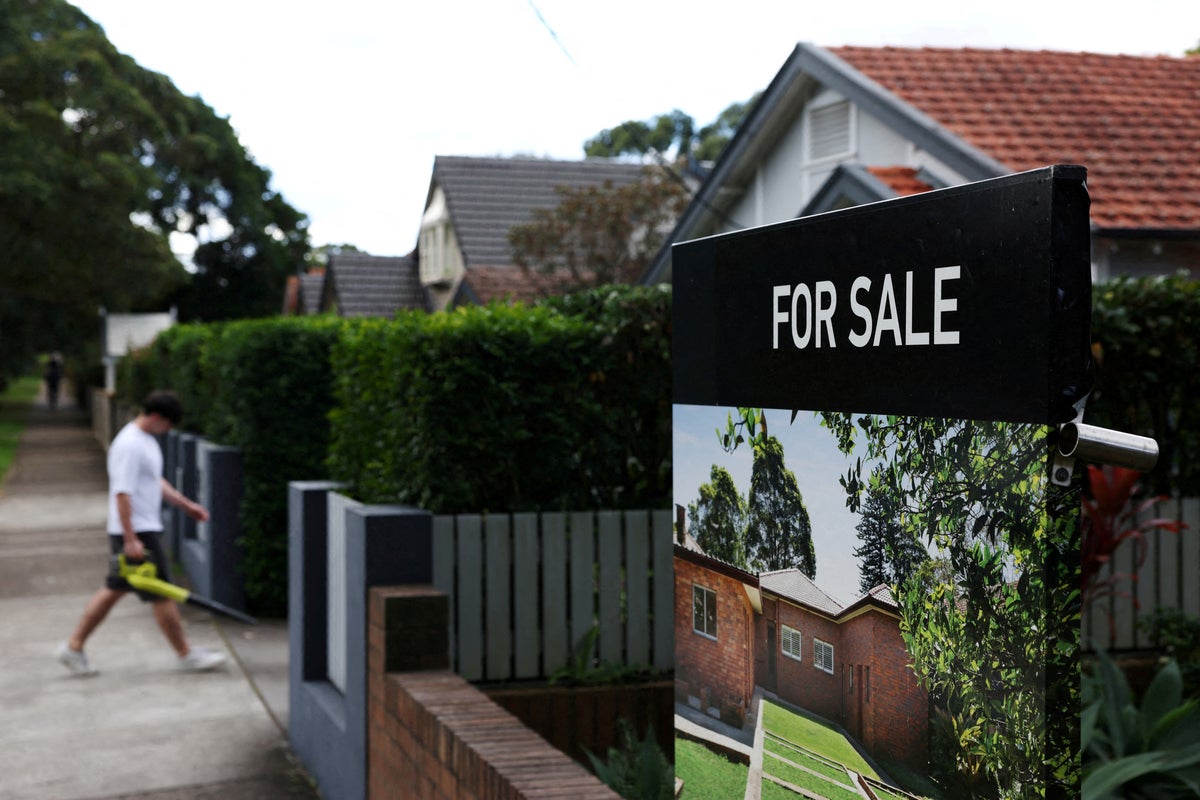
Until recently, American property owners could reasonably expect swift sales that yielded prices above their asking rates. Today, that is no longer a winning prospect. Across the country, a stagnant housing market has left many vendors stranded in uncertainty, unable to move for employment, purchase larger properties for expanding families, or execute major life decisions dependent on selling their homes.
Real estate agents report that sellers who can afford to pull their listings are generally doing so, while those remaining face growing pressure to reduce asking prices and contribute thousands of dollars toward buyer costs. This trend marks a pronounced shift from earlier in the decade, when low mortgage rates energized buyers, creating an intense market that routinely drove property values significantly above asking prices. Today, elevated mortgage rates, cumulative price growth from recent years, and high inflation have caused market activity to stall.
These factors are placing homeownership out of reach for many while others delay purchases until conditions improve. (Reuters) Sellers now far outnumber buyers, leaving owners faced with difficult decisions: implement steeper price cuts and financial concessions to attract buyers, or remain listed longer and delay significant personal plans. "The dynamic has shifted back toward more of what we call buyers’ markets rather than sellers’ markets," said Mark Fleming, chief economist at First American Financial. "(That) means you might have to reduce your price, you might give a concession to get your home sold, it might have to stay on market longer." A year after putting her home up for sale, an empty nester prepares to move on Following the departure of her three children, Liz Suder sought to sell her four-bedroom, three-and-a-half-bath home in Murphy, Texas, roughly 20 miles outside Dallas, and purchase a smaller property.
"I was waiting to sell the house before I started looking," said Suder, 56. "I didn’t want to have two mortgages." Suder ended up putting her life on hold for over a year. The finance director, who owned the residence for 21 years, originally listed it in April 2025 for $750,000.
After six months and multiple price reductions, the house remained unsold, prompting her to remove it from the market. She relisted the property in February for $725,000 ahead of the spring buying season. A buyer eventually agreed to purchase it for $650,000, with Suder providing $9,000 toward repair costs.
"I never expected it to take a full year, and for me to have to reduce the price by that much," she said. Personal plans delayed while maintaining price expectations Rick Ganga needs to secure a buyer for his property in Blaine, Washington, before moving forward with his personal plans. A pending divorce requires the sale of his three-bedroom, two-and-a-half-bath home, which went on the market on June 1 for $825,000.
Lowering the price to just below $800,000 has failed to attract interest. "There’s (been) no offers, virtually zero traffic," said Ganga, 58. Although some sellers in his neighborhood have reduced asking prices by $100,000 or more, Ganga notes that having owned the property only since 2022 leaves him with insufficient equity to make further cuts.
"That’s not anything I’m going to entertain," he said. "It doesn’t make sense." Until a sale occurs, the operations manager must set aside plans to transfer out of state with his company. "I honestly believe that it will probably sit until spring or summer of next year," he said.
Sellers lose bargaining power as housing activity slows down After dropping below 6% in February, average 30-year mortgage rates climbed to 7.4% this month—their highest point in nearly three years. This upward trajectory in interest rates has stifled housing sales nationwide. As price reductions became widespread, the national median listing price fell 1.2% year-on-year in September to $419,250, marking the 11th straight monthly decline, according to Realtor.com.
Approximately 21% of active listings saw initial price cuts, a four-year peak. (Getty) Buyers frequently request and receive financial contributions from sellers to cover closing costs. Rising mortgage rates have also allowed buyers to negotiate for seller contributions toward rate buy-downs, reducing monthly borrowing expenses. "It’s sort of like an indicator of where the market is right now, with buyers gaining leverage at the expense of sellers, and sellers doing more now to meet buyers halfway," said Jake Krimmel, a senior economist at Realtor.com.
While advantageous for purchasers, these shifts may not suffice to offset the broad affordability challenges keeping many buyers out of the market. Last month, sellers outnumbered buyers by approximately 63% across the 50 largest metropolitan regions in the U.S., according to Redfin. The active buyer count of roughly 929,000 marked the lowest figure recorded since 2013, while seller numbers reached their highest level since 2020.
Stagnant housing market impedes plans for a larger home This significant disparity between buyers and sellers means Ethan Butner faces a longer wait to sell his home in Troutdale, Oregon, located 16 miles east of Portland. Butner, a service manager, has had an offer accepted on a larger home near Portland for his family. However, completing that purchase depends on selling his current three-bedroom, two-bath residence.
Progress has stalled. The house has remained listed for over two months at $480,000. A $30,000 price drop yielded only one offer, which subsequently fell through.
To improve the home's appeal, Butner recently replaced the flooring and installed a new water heater and dishwasher. "It’s been a roller coaster of emotion for myself, my family, especially my fiancée,′ said Butner, 36. "We’ve had this vision of being in our own home and all the kids having their own rooms and all the good stuff that comes along with that.
We definitely feel stuck at the moment."
Source: The Independent